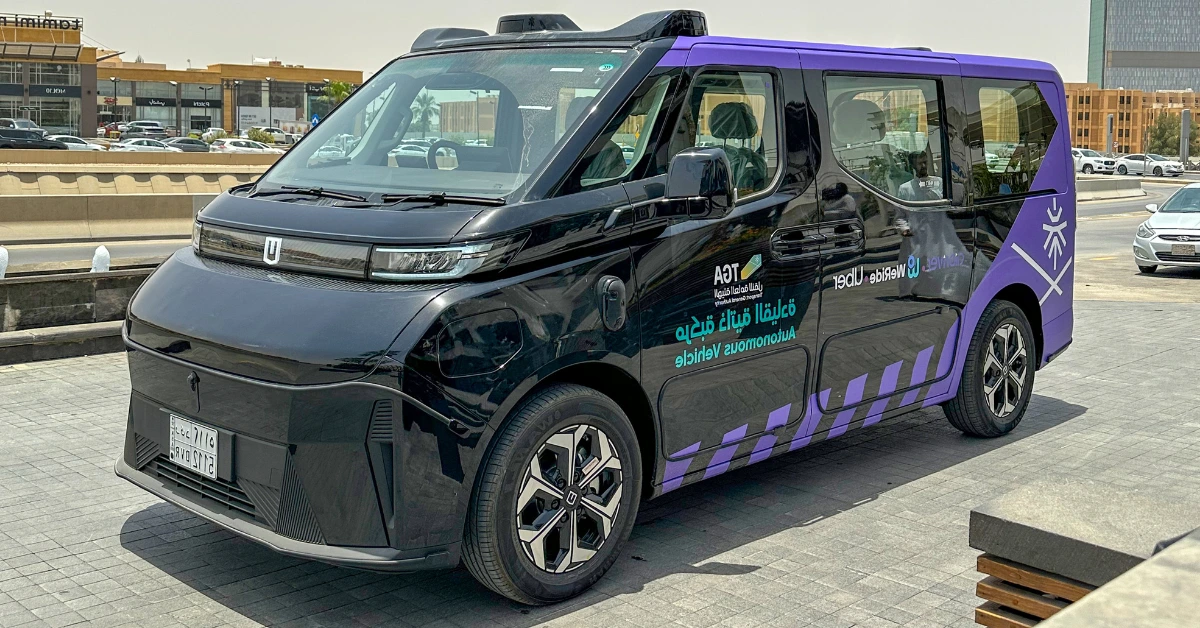
Riyadh woke up to a new kind of taxi this summer: one without a human behind the wheel. WeRide robotaxi won Saudi Arabia’s first-ever robotaxi permit in July 2025, clearing the way for pilot rides across Riyadh and promising full commercial service by the end of 2025. This move marks a major step for both the company and the Kingdom’s drive toward smart, tech-led transport.
The permit was handed over after WeRide completed the Transport General Authority’s (TGA) Regulatory Sandbox for autonomous vehicle piloting. The approval lets WeRide operate Level 4 robotaxis in defined areas — starting with routes that link King Khalid International Airport to central Riyadh, key highways, and selected city destinations. Jennifer Li, WeRide’s CFO and head of international, called the permit “a major step in our global expansion,” saying it lets the company “scale Robotaxi services and unlock new commercial opportunities in Saudi Arabia.”
Why Riyadh — and why now?
Saudi Arabia’s Vision 2030 has pushed the country to diversify its economy and build “smart” cities. Transport officials say autonomous mobility fits that plan: it can cut costs, improve road safety, and lower emissions when paired with electric vehicles. The TGA and several ministries coordinated tests and validations before granting the license, underlining how seriously the Kingdom treats safety and local integration. The initial launch was attended by Minister Saleh Al-Jasser, who led the pilot’s inauguration and framed the project as part of Riyadh’s smart mobility push.
A key reason WeRide can scale quickly in Saudi Arabia is its formal partnership with Uber. Under the deal, WeRide’s autonomous vehicles will be bookable through the Uber app, with Uber handling fleet operations and customer access. Tony Han, WeRide’s CEO, said the Uber tie-up helps make the technology more affordable and easier to deploy at scale. Uber CEO Dara Khosrowshahi described the partnership as “one of the biggest” steps toward making autonomous mobility widely available. These public statements show both firms are betting on the same route to mainstream robotaxi services.
What Level 4 means for riders
Level 4 autonomy — the capability WeRide is deploying — lets a vehicle handle all driving tasks inside its defined operational domain without human control. That domain can include highways, airports, and mapped city neighborhoods. In practice for Riyadh riders, that should mean a passenger taps the Uber app, picks a robotaxi, and travels without an onboard safety driver under permitted conditions. Regulators say testing covered sensors, software, and redundant safety systems before awarding the permit.
Timeline snapshot of robotaxi
| Date | Milestone | Source |
|---|---|---|
| May 2025 | WeRide starts ground prep and announces Riyadh entry | WeRide press release. |
| July 28, 2025 | Robotaxi permit granted by TGA; pilot launched in Riyadh | WeRide/GlobeNewswire & TGA event. |
| May–Oct 2025 | Uber–WeRide partnership expanded to more cities | Uber press release. |
| End-2025 (target) | Full commercial Robotaxi service expected on Uber in Riyadh | Company guidance. |
Balancing excitement with caution
The news has stirred optimism — and some skepticism. Analysts say the Gulf is open to AV pilots thanks to clear regulations and heavy investment, but they also warn of practical challenges: adapting technology to local weather, integrating with existing traffic systems, and proving safety at scale. Reuters and other outlets note that while Chinese robotaxi firms like WeRide and Pony.ai are expanding fast in the Gulf, the push comes with scrutiny over deployment timelines and real-world edge cases.
Voices from the field
Ryan Zhan, WeRide’s regional general manager for the Middle East and Africa, told Arab News the entry “enables WeRide to scale Robotaxi services and unlock new commercial opportunities in Saudi Arabia.” Local partners — including the TGA, the Ministry of Interior, the Saudi Data and AI Authority, and private operators — feature in the pilot, showing government and private sectors are both involved. At the same time, public safety experts urge slow, visible validation before scaling, and transport analysts recommend staged rollouts to build trust.
What this means for the region
If WeRide’s Riyadh rollout succeeds, the Gulf could become a global testing ground for robotaxi models that rely on public–private partnerships and regulatory sandboxes. The company already holds permits in multiple markets and has tested driverless services in Abu Dhabi and elsewhere — positioning it as one of the most active global players. Observers say success here could spur similar deployments across the GCC and encourage deeper investment in smart city infrastructure.
Looking ahead
WeRide and Uber have set a clear near-term target: get the service running on Uber by late 2025, then expand across more routes and cities. Experts say the next 12–18 months will be critical: regulators will watch safety data, pilots must prove reliability in real conditions, and operators will need to show that robotaxis can work alongside human-driven traffic. If those boxes are ticked, Saudi Arabia may soon add driverless rides to its Vision 2030 story — but rollout will depend on steady testing, transparency, and ongoing public dialogue.

Hey, I’m Arafat Hossain! With 7 years of experience, I’m all about reviewing the coolest gadgets, from cutting-edge AI tech to the latest mobiles and laptops. My passion for new technology shines through in my detailed, honest reviews on opaui.com, helping you choose the best gear out there!












2 thoughts on “WeRide secures Saudi Arabia’s first robotaxi permit — Uber to roll out driverless taxis in Riyadh by end of 2025”
Comments are closed.