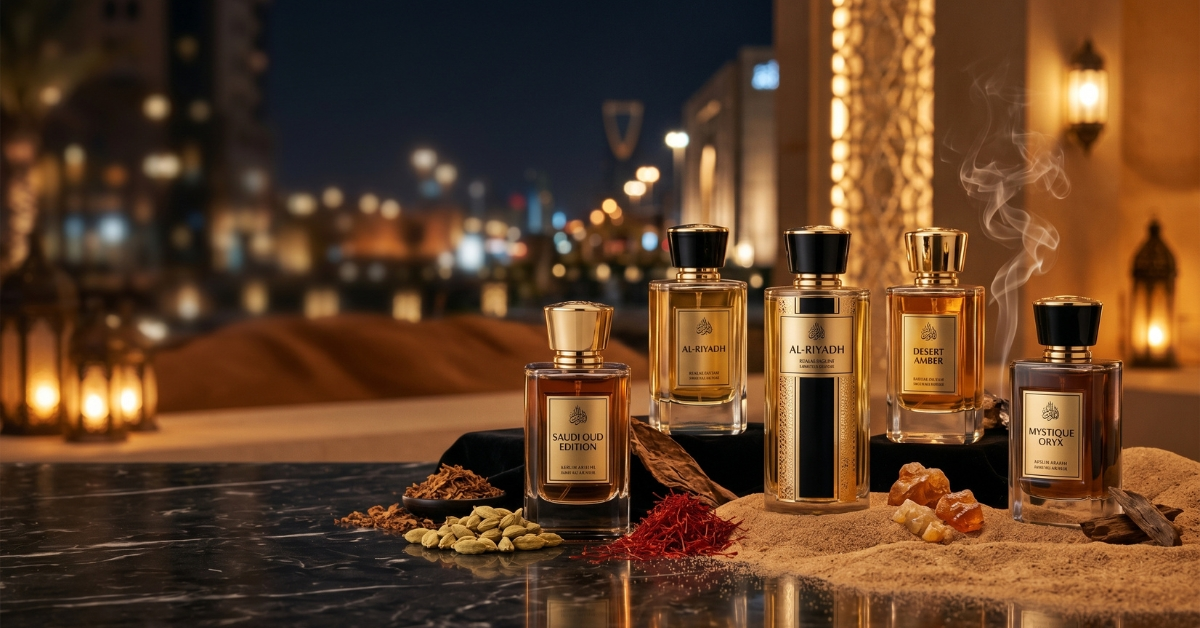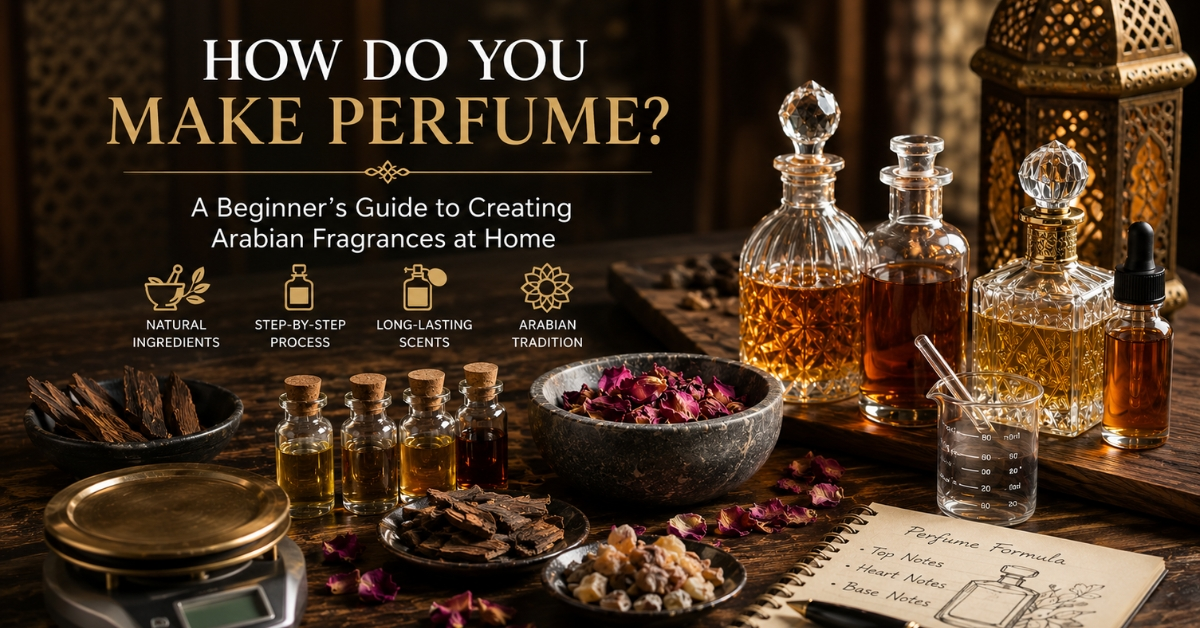
The word perfume derives from the Latin per fumum, meaning “through smoke”, but in Saudi Arabia, fragrance is defined by life itself. Perfume is deeply connected with our daily rituals. People weave together the rich scents of oud, musk, and bakhoor before family gatherings, Jummah prayers, and festive Eid celebrations.
Making perfume at home is surprisingly accessible. You can bottle your own memories and craft a signature scent using age-old traditions and contemporary blending techniques. When I tested several oil combinations from local perfume shops in Jeddah, I noticed that small changes in oud concentration dramatically affect both projection and longevity.
This guide will show you exactly how to make perfume at home. We will cover beginner formulas, mistakes to avoid, and the secrets to crafting long-lasting Arabian perfumes.
What Is Perfume Made Of?
Every fragrance relies on a delicate balance of specific ingredients. A standard perfume weaves together four main components. These include essential oils for the scent, a carrier oil or alcohol base, fixatives to hold the scent together, and occasionally distilled water.
There is a distinct difference between Western and Arabian perfumes. Regional traditions dictate different priorities when constructing a scent profile.
| Western Perfume | Arabian Perfume |
|---|---|
| Alcohol-heavy base | Oil-heavy base (Attar) |
| Fresh citrus and floral focus | Oud, amber, and musk focus |
| Light to moderate projection | Strong, room-filling projection |
Wandering through a quaint bustling souk in Riyadh, amidst the lively vendors, the warm spices, and the rich textiles, you quickly learn that Middle Eastern fragrances prioritize depth. Oil-based perfumes dominate the local market.
Essential Ingredients Needed to Make Perfume
To craft an authentic Arabian perfume, you need high-quality raw materials. Local artisans rely on a specific palette of deeply evocative notes.
Essential Oils Common in Saudi Arabia
The heart of DIY perfume recipe creation starts with your aromatic oils. You will want to source authentic oud, Taif rose, warm sandalwood, and rich musk. Amber, saffron, and vanilla also play vital roles in traditional blends.
Best Carrier Oils for DIY Perfume
A carrier oil dilutes the strong essential oils so they are safe for your skin. Jojoba oil is excellent because it closely mimics the skin’s natural sebum. Sweet almond oil and fractionated coconut oil are also wonderful, odorless choices.
Alcohol vs Oil-Based Perfume
Western perfumes use high-proof alcohol to help the scent project into the air. However, Islamic preference often leans toward alcohol-free attars. Oil-based perfumes sit closer to the skin but offer incredible longevity, lingering gracefully throughout the day.
Tools You Need for Perfume Making at Home
You do not need a professional laboratory to start mixing your own scents. A basic DIY perfume kit requires just a few simple items.
- Small glass bottles (preferably dark glass)
- Glass pipettes or droppers
- A digital measuring scale
- Paper test strips
- A dark, cool storage container
I found many beginner perfume oils in small shops near Riyadh’s Souq Al Zal much cheaper than importing full kits online. You can easily gather these tools from local attar shops, online fragrance suppliers, or traditional perfume souks.
Step-by-Step Guide — How Do You Make Perfume?
Crafting a fragrance is an intimate process. Follow these steps to weave your raw materials into a beautifully balanced perfume.
Step 1 – Choose Your Fragrance Family
Before mixing, decide on the mood of your perfume. Fragrance families include woody, oriental, floral, fresh, and gourmand. Arabian perfumes typically blend woody and oriental families to create a sense of warmth and luxury.
Step 2 – Understand Top, Middle, and Base Notes
A perfume reveals itself in layers. Top notes provide the first impression and fade quickly. Middle notes form the heart of the fragrance, while base notes provide long-lasting depth.
| Layer | Example Ingredient |
|---|---|
| Top | Bergamot or Sweet Orange |
| Middle | Taif Rose or Jasmine |
| Base | Oud and White Musk |
Step 3 – Create Your Perfume Formula
A standard beginner formula uses 30% top notes, 50% middle notes, and 20% base notes. For an authentic DIY Arabian perfume example, you might blend zesty saffron at the top, lush rose in the middle, and heavy oud at the base.
My first homemade oud blend smelled too sharp because I used excessive base notes without balancing the floral middle notes. Always record your drops so you can replicate your successes.
Step 4 – Blend the Oils Properly
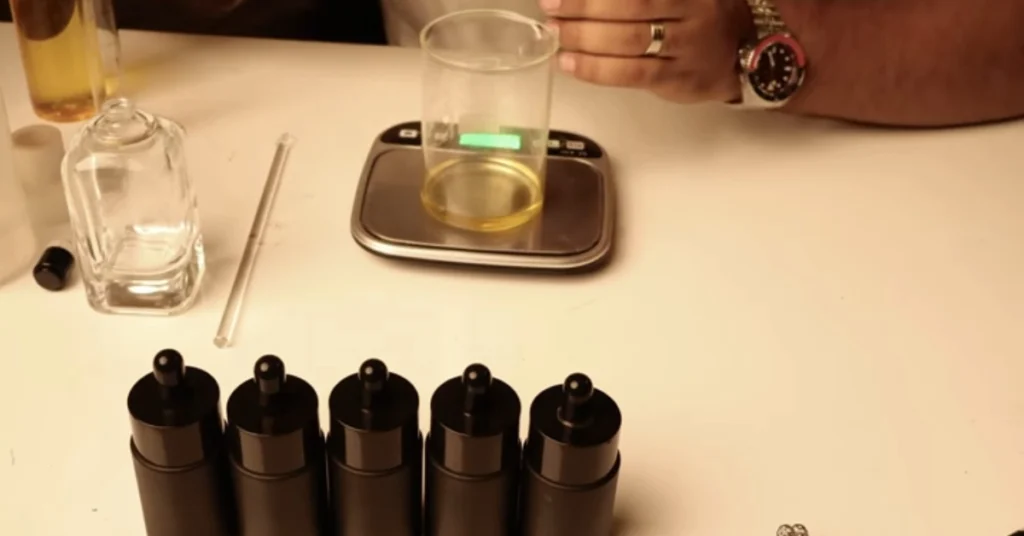
Add your base notes to the empty glass bottle first. Follow with your middle notes, and finish with your top notes. Once your essential oils are blended, add your chosen carrier oil and swirl the bottle gently.
Step 5 – Let the Perfume Mature (Maceration)
Perfume needs time to age so the distinct oils can fuse into a single, cohesive scent. Store your tightly sealed bottle in a cool, dark place for two to six weeks. The hot Saudi weather can easily ruin delicate oils, so avoid direct sunlight completely.
Step 6 – Test and Adjust
After maceration, apply the perfume to your skin. Paper test strips are helpful, but human skin chemistry alters a fragrance significantly. If it feels too weak, you may need a higher concentration of essential oils.
How to Make Long-Lasting Perfume in Saudi Arabia
The intense summer heat can cause fragrances to evaporate rapidly. To combat this, local traditions rely on specific techniques.
Use Strong Base Notes
Base notes are the anchor of any scent. Ingredients like oud, amber, patchouli, and musk evaporate very slowly. Building your perfume around these dense notes ensures the scent survives the afternoon heat.
Why Heat Affects Perfume Performance
High temperatures cause the alcohol or carrier oils to heat up, pushing the scent off your skin faster. In hot climates, applying an unscented lotion before your perfume gives the oils something to grip.
Common Mistakes Beginners Make When Making Perfume
When learning how to make perfume, less is often more. Beginners usually make a few predictable errors.
Using Too Many Oils Together
Throwing ten different oils into a bottle usually creates a muddy, confusing scent. Start with just three or four notes. Master a simple rose and musk blend before attempting complex formulations.
Not Letting Perfume Mature
Patience is vital for perfume makers. Smelling a freshly mixed perfume is like tasting an unbaked cake. The resting period is mandatory for the harsh edges to soften.
DIY Arabian Perfume Recipes
Ready to start blending? Here are a few simple recipes to try at home. Adjust the drop counts based on your personal preference.
Simple Oud and Rose Recipe
Combine 4 drops of oud essential oil, 6 drops of rose absolute, and 2 drops of bergamot. Fill the rest of a 10ml roller bottle with jojoba oil. This creates a timeless, romantic scent.
Vanilla Musk Perfume Recipe
Blend 5 drops of vanilla extract, 4 drops of white musk, and 3 drops of sweet orange. Mix with fractionated coconut oil for a soft, comforting daily fragrance.
Is Making Perfume at Home Cheaper Than Buying Luxury Perfumes?
Many people wonder if mixing perfume oils in Saudi Arabia will save them money. The answer depends on your ingredients.
| DIY Perfume | Designer Perfume |
|---|---|
| Custom scent tailored to you | Pre-made mass market scent |
| Lower overall cost per ml | Expensive retail markups |
| Personal formula and pride | Brand prestige and packaging |
While genuine aged oud is quite expensive, basic DIY perfume making is generally much cheaper than buying luxury brands. You are paying for the raw materials rather than the marketing budget.
Frequently Asked Questions
How do you make perfume last longer?
Apply your perfume to moisturized skin, focusing on pulse points like the wrists and neck. Using heavy base notes like oud and amber will also significantly increase the longevity of the fragrance on your skin.
Can I make perfume without alcohol?
Yes. Alcohol-free perfumes, known as attars, use carrier oils like jojoba or almond oil instead of alcohol. These oil-based perfumes are deeply embedded in Middle Eastern culture and are gentler on sensitive skin.
What is the best oil for homemade perfume?
Jojoba oil is widely considered the best carrier oil because it has no scent and a long shelf life. For the fragrance itself, high-quality rose and oud oils are the absolute best choices for Arabian blends.
How long should homemade perfume sit before use?
You should let your homemade perfume sit in a cool, dark place for at least two to six weeks. This process, called maceration, allows the different essential oils to bind together and smooth out properly.
Expert Tip
In hot Saudi weather, oil-based perfumes usually perform better than alcohol-heavy fresh fragrances because oils evaporate slower in dry heat.
Bottling the Final Drop
Perfume making is an art form that honors human connection and memory. By weaving together traditional craftsmen’s techniques and your own personal taste, you can create something truly unique. A handcrafted fragrance makes a beautiful gift, and the process itself is deeply rewarding.
Which fragrance note do you love most? Are you drawn to the heavy richness of oud, or the delicate sweetness of Taif rose? Gather your oils, find a quiet space, and begin crafting your own signature scent today.
References
- Top 15 Best Perfumes in Saudi Arabia (2026) — Luxury Scents That Turn Heads Instantly
- Splendid Perfume 2026: Smart Buy or Saudi Summer Mistake?

Tanvir Hosen
Tanvir Hosen is a fragrance reviewer based in Saudi Arabia, originally from Bangladesh, specializing in perfume performance testing under Middle Eastern climate conditions. With over three years of experience reviewing designer and accessible luxury fragrances, he evaluates scent structure, projection strength, heat resistance, and long-term wearability.
His reviews are focused on helping Saudi and GCC consumers select fragrances that perform reliably in high temperatures while remaining office-appropriate and socially versatile.